UAL Level 3 Acting units 1-4
Re-cap
In the course of the first week running we had gotten to introduce ourselves and elaborate the skills of actually being true actor.
Week 2(Birthday week)
In the beginning of this week we went back in time of acting,drama and theater.Which was a very long time ago all the way back in 5th century 400bc-500bc.
Greek Theatre
Greek tragedies and comedies were always preformed in outdoor theaters. Early Greek theaters were probably little more than open areas in city centers or next to hillsides where the audience,standing or sitting,could watch and listen to the chorus singing about the exploits of a god or hero.From the late 6th century BC to the 4th and 3rd centuries BC there was a gradual evolution towards more elaborate theater structures,but the basics layout of the Greek theater remained the same.
Parts of the theater
 Orchestra;(literally,"dancing space")A circular level where the would dance,sing and interact with the actors.
Theatron:(literally,"viewing-place")This is where the spectators sat.
Skene:(tent) Back of the stage,which was usually decorated as a palace,temple,or other buildings.
Parodos:("passageways")The paths by which the chorus and some actors made their entrances and exits.
Four qualities of Greek Drama
-Performed for special occasions(festivals).Athens had four festivals worshiping Dionysus
(Dionysus was the son of Zeus.he was the only god born of one god and one mortal parent.it was believed that he could endow man with divine creativity).
-Competitve-Prizes were awarded.Actors and playwrights competed e.g Oedipus won 2nd place.
-Choral-There was singing;the chorus was made up of men(from 3-5o) moving the story along.
-The stories were based on myth or history.
Types of Greek Drama
• Comedy
• Tragedy
• Satyr Plays
Comedy and tragedy were the most popular types of plays in ancient Greece.Greek comedies were mainly satirical and mocked men in power for their vanity and foolishness.When dealing with Greek comedy it is mainly exaggerated,farcical and consists of sensual pleasures.
Tragedy deals with love,loss.pride,the abuse of power and relationships of men and gods.Typically the main protagonist of a tragedy commits some terrible crime without realizing how foolish and arrogant he has been.Then,as he slowly realizes his error,the world crumbles around him.
Satyr were the short plays performed between the acts of tragedies.they made fun of the plight of the tragedy's characters.Satyrs were mythical half-human,half-goat servants Dionysus.
We will be looking at
Oedipus: The story of Oedipus was written by playwright Aristotle.He used this play and its plot as a supreme example of tragedy.
Types of Greek Theatre
- Comedy
- Tragedy
- Satyr Plays
Tragedy deals with love,loss.pride,the abuse of power and relationships of men and gods.Typically the main protagonist of a tragedy commits some terrible crime without realizing how foolish and arrogant he has been.Then,as he slowly realizes his error,the world crumbles around him.
Satyr were the short plays performed between the acts of tragedies.they made fun of the plight of the tragedy's characters.Satyrs were mythical half-human,half-goat servants Dionysus.
We will be looking at
Oedipus: The story of Oedipus was written by playwright Aristotle.He used this play and its plot as a supreme example of tragedy.
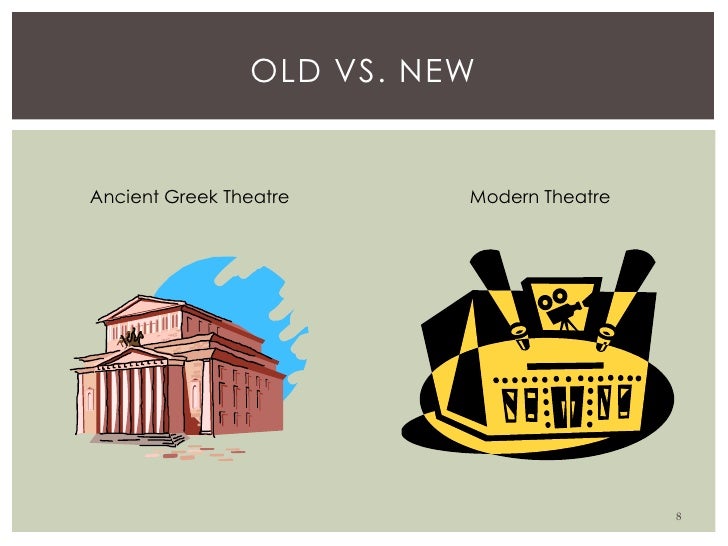
Difference between Greek and Modern Theatre
Difference between Greek and Modern Theatre
Theatre today as in ancient Greek times is a popular from of entertainment. Today’s theatres share many similarities with the Greek predecessors however they are also very different. There are in fact many differences for example; layout, special effects, seating arrangement, the importance of drama and religion, setting, location and architectural features.
In ancient Greece festivals were mainly held at the Great Dionysia. This was the oldest theatre in Greece and many plays were performed here for example the first performance of Antigone. The patron of the theatre was the God Dionysus and there was a temple near which was dedicated in his honour. There was also a statue of the patron Goddess Athene. Today there is no link between religion and theatre, as we live in a multi-cultural society with people who follow many different faiths; therefore the theatre is secular to appeal to all people.
In conclusion on my opinion, When it comes to the end of the competition each judge wrote his order of merit on a tablet. These 10 tablets where placed in an urn and the archon drew only five of them out. The verdict was decided by the order of the merit on these five tablets. The prizes where traditionally latera bull for the best poet and a bronze tripod for the winning choregos. Today there is also a lot of competition, in cinemas and in theatres. Today events are held such as Baftas and Oscars. Different plays and films compete to win prizes at these events. For a reward for wining they normally get an award, which is normally made from metal. I think that modern theatres are a lot better than ancient ones although I do think that the sound effects in ancient theater's was a lot more effective. I think it would be nice if theatres had no roof although the weather in England makes it impossible. Although I do think that if women played some parts in the ancient theatres then it would have been a lot more effective when it came to serious scenes.
In the course of the week sticking to our Greek backgrounds e.g How Greeks acted,how evil men and women were at that era and that lastly how to compare modern theatre and Greek theater. We where given roles in the well-known Frogen Woman,Antigone and lastly Oedipus(mine)
Rob our teacher made the decision on to give us our first major scripts of the academic year.The class was split into groups of 2 or more. during the course of the class learning the lines of the script we will rehears and receive feed back from our peers and teacher to insure that we are embodying our role given to us.
Our context teacher Sharon has also give the class a script from the well known Greek tragedy Medea.(its clear that this month will be looking closely into Greek tragedies if you haven't noticed)Again we were split into groups with a section of the play,working on the play Medea will truly let us understand the daily life a mistreated woman who has been lied on ,cheated on and so much more.
Coming to the end of the week
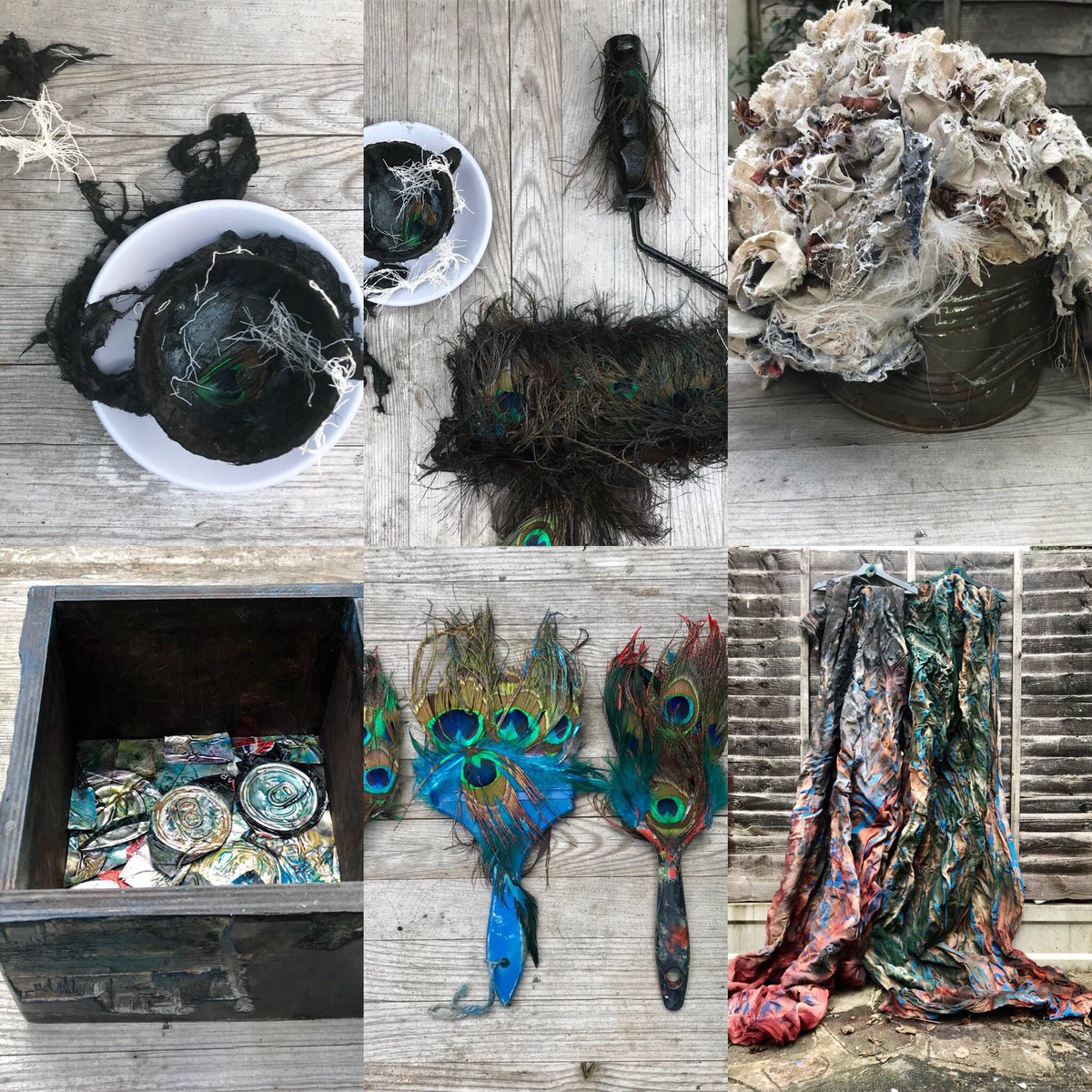
For example writing a script or even involving weird objects with feathers stuck onto black colored forks and using them as props into action.
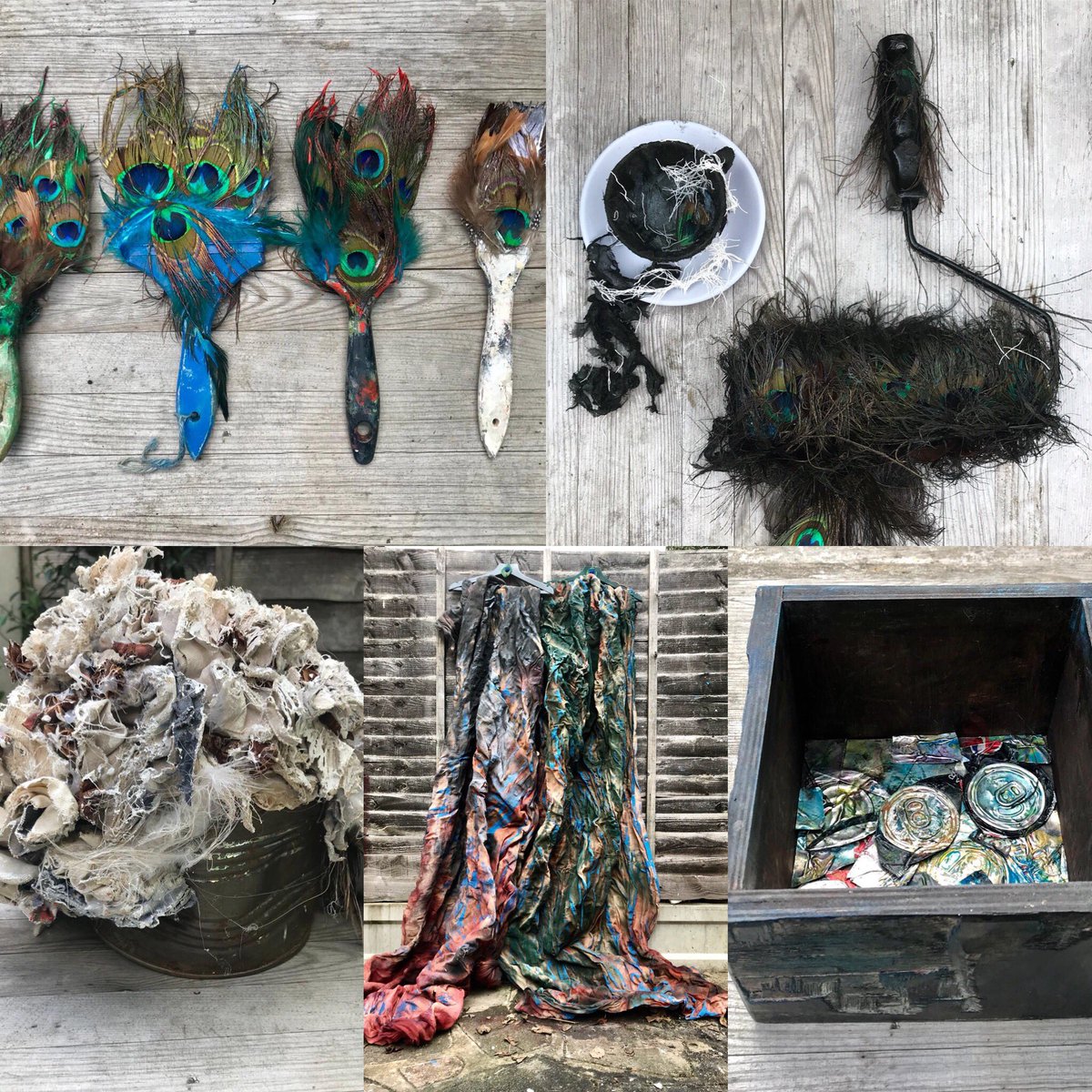
Anyways enough of me our, special guest 1st prize for best painting at the open exhibition in Cork Street 2009 and also second 2nd prize winner for Churchill portrait in 2011(Yes i did my research) Blandine Martin gave us the amazing opportunity to come visit our college and intrigue us into mixed where she works with mostly timber,metal,wood,textiles or sand to create moments and as actors that's what we did as young actors.
Blandine selected a wide range of her her very unique pieces of art work and a camera that pieces of drama that we created the the art is shown at her exhibition.
What work out?
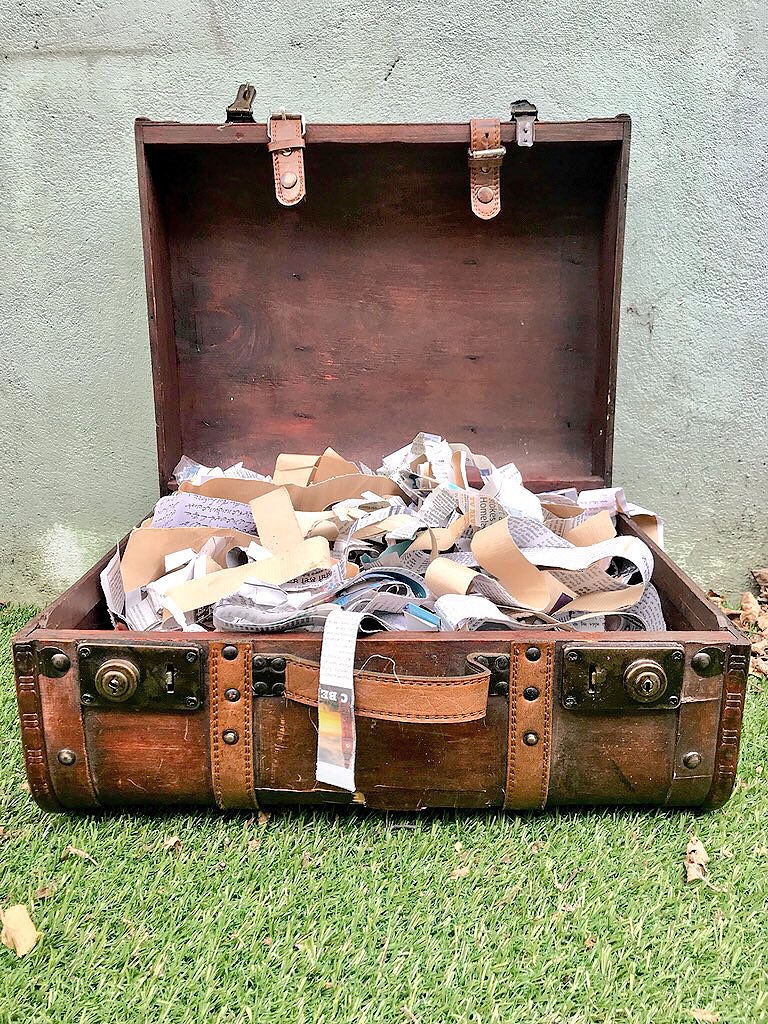
Well we started off with a warm-up game. The objective of the game was to us the objects(board marker,Hola hoop and shiny glasses case)to embody what it is and something else.For example the white board marker could be a sewing needle used for sewing weave down onto a wig cap.we played the game 15 -20 mins to warm-up our creativity.Which was a success because we opened our mined more and thought deeper about the transition.
Lastly we were really able to embody and claim the sculptures as if it was coming from our souls that I even did a piece based on the Greek tragedy, that we were studying at the time. I was embodying Jokasta,Oedipus's wife. I portrayed more of her evil side and who she was willing to do anything to stay in power.
What didnt work out?
 Well rob wanted us to go more out side
where there is a man.
He got robbed.He got caught.
The End. Which is when rob decide
to come in cause we were all stuck in
the same story line with his ideas. for
example silent pieces and still pictures.

Key advice of this week:
in addition Aim to react to the words you hear which will help me to respond with all my senses.


Comments
Post a Comment