UAL Acting Greek Theatre
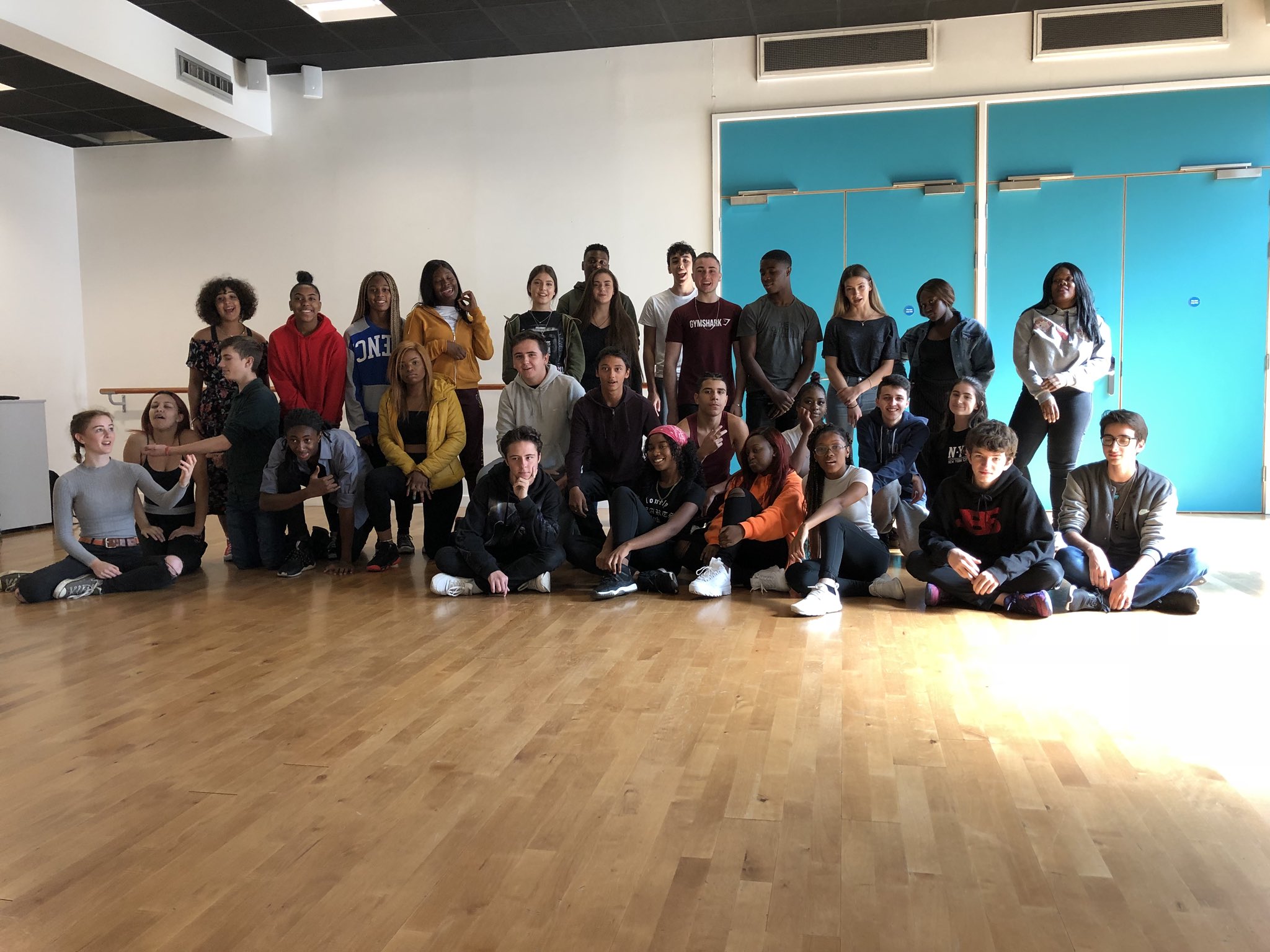
Week 1This was the first introduction to a new unit. Our teacher Rob split us into groups. Each group had to make a list of these main topics related to theatre and what may come with it. The topics where skills, hopes, rules and fears.
Skills:
Observation: You do not need a rehearsal, special equipment, or a dedicated time. It is called “observing,” Then the true fun begins. Try to imagine the life of this person, who must be your hero by now. I will call him/her "A." What does A do for a living? Does A have a family? Where is A going now? What is the biggest problem A has to solve? What is A dreaming about? If you would dramatize A's life, what type of play would it be?

Openness: Emotions are the key to acting you just have to use the emotions. We just take those amazing feelings come back and turn them in to amazing scenes. We would like everyone to see the amazing effects that theater has on us and on others!! With out acting we would all be emotionless and robotic and acting helps show we have emotion! Without acting, talking to friends would be boring and lifeless.
Fears:
Being shy:So if you're shy, you're probably too scared to audition for a few people, let alone get up on stage in front of an audience. You're scared about the uncertainty of the profession, and the possibility you won't be able to make a living.An actor must be well-read, intellectually sharp and innately curious, as well as a good listener.Teaching acting is not magic; it's mostly watching what a student is doing, suggesting another way in or out of an obstacle, and then waiting to see when the student begins finding their own way out.
Fear of failure: We were all unafraid at one point in life. I remember a quote being said by Ken Robinson author/educator once said "If your not prepared to do wrong you will never come up with anything original."But we can recover from failing. Failing’s just one result. One that we can modify and improve for next time. And one that causes enough psychological discomfort to encourage meaningful change.
Being a failure: On the other hand, is an identity. One that doesn’t lend itself to recovery. One that, instead of leading to growth, often leads to stagnation and depression.
Hopes
Success:Ambitious people are always striving for success. Whether you’re trying to be a lawyer, entrepreneur, dancer or a plumber if you’re ambitious enough, you won’t live a fulfilling life until your thirst for success has been satisfied. Acting is no different.It’s perseverance, it’s Hard Work, it’s Talent; then all of that multiplied by Luck, which then equals Success.
Rules:
Project your voice: When it comes to voice control, communicating clearly refers to how well you are able to enunciate or articulate your words. Enunciation is a vital part of speaking clearly. ... This is especially important for actors, public speakers, singers, and anyone who must communicate verbally with others on a regular basis.
During the week
Vocal workshop by Rob Alexander
There are several exercises you can do to extend your vocal range. In the lesson we were able to control our breathing and voice together. We needed to consider the vocal elements at your disposal. Think about your character's accent and register, and the type of performance required. You can practice your articulation and breathing.An actor needs to be able to project their voice but still keep connected to the emotional truth of the character.
We firstly started off by relaxing and breathing for a warm up. Inhaling through our voice and when exhaling slide our voice out until the breath is out. Breathing exercises can ensure the voice is supported will help the project from our voice. Standing in a neutral position will also help with concentration and relaxation.
Finishing off that warm up we moved onto our vowels,that consisted with OO,OH,ORE.With your hand on your diaphragm, breathe in through your nose for five seconds. Hold your breath for 10 seconds and then breathe out through your mouth steadily for five seconds. Practice pushing out the breath for longer and then with a voiced vowel sound. Oo,Oh and Ore altogether.and continue to do so until the instruct says to stop. Warm in up the vowels can help when is comes to ensuring the words on a script or poem is said full and and the breaking down of words when confused of the spelling.
The thirdly stage consisted with us using our consonants C,G,L,N,D,T,M,P and B. We were instructed to use mainly our tongue,lips,teeth and voice.This is an excellent exercise for improving articulation and can be used for plosives and other consonants to stop them becoming weak or splashy.This exercise will help our word fly out into the auditorium with sufficient force or energy to make an impact.Focus on keeping the sound clear, crisp and precise.
After perfecting our consonants ,vowels and breathing we where able to put it into practice. We were each split into groups reading 3 different poems. when practicing with poems it is harder to be true throughout the text for and actor, but as actors we need embody a role or character in that time.When reciting the poem we will be critiqued on and given feedback.
Feedback
• Our instructor realized that we need to keep the energy through out the lines so that the character or emotion behind that text is conveyed.for example one of my all time favorite actors/filmmakers Tyler Perry uses a range of voices and projection especially when switching roles e.g switching to Medea. Tyler manages to keeps his energy in every word of every sentences in ever scene. giving high levels of energy seeing as he is a comedian and the energy can give of a great understanding of who the character maybe.
• Controlling our pace when reading so that words a expressed with a wide b and expanded meaning to the audience.
• Avoid consonants being telescoped meaning that we needed to stop overlapping the original text and increasing the intensity of the dialogue.
Patsy Rodenbery is a British vocal coach ,actor and theatre director . She is world’s leading voice teachers and coaches, and also as a renowned authority on Shakespeare. Patsy helps take the fear out of approaching Shakespeare.Her compassion for communication and spoken word has been broken down into racial.religious and class barriers from around the world.
Keywords:
Glottal:A glottal stop is a speech sound articulated by a momentary, complete closing of the glottis in the back of the throat. Glottal stops occur in many languages and usually pattern as consonants.
In addition to help us outside of the class we were told to research voices gurus Cindy Berry and Patsy Rosenberg. Cicely berry a British theatre director and vocal coach. Who exercises to open out the voice itself so that the actor finds her/his true potential. in addition she teaches that since life in the voice springs from emotion, drab and uninspiring technical exercises can never be sufficient. She would never try to separate the sound of words from their living context.
What have I learned
Diction and articulation:Diction means clarity of speech. An actor with good diction speaks in a way where all their words are well pronounced. In order to have good diction you must have good articulation. This is the ability to make every sound and consonant clear, so that individual letters are not lost within words and they are sounded correctly.
Skills:
Observation: You do not need a rehearsal, special equipment, or a dedicated time. It is called “observing,” Then the true fun begins. Try to imagine the life of this person, who must be your hero by now. I will call him/her "A." What does A do for a living? Does A have a family? Where is A going now? What is the biggest problem A has to solve? What is A dreaming about? If you would dramatize A's life, what type of play would it be?
Openness: Emotions are the key to acting you just have to use the emotions. We just take those amazing feelings come back and turn them in to amazing scenes. We would like everyone to see the amazing effects that theater has on us and on others!! With out acting we would all be emotionless and robotic and acting helps show we have emotion! Without acting, talking to friends would be boring and lifeless.
Fears:
Being shy:So if you're shy, you're probably too scared to audition for a few people, let alone get up on stage in front of an audience. You're scared about the uncertainty of the profession, and the possibility you won't be able to make a living.An actor must be well-read, intellectually sharp and innately curious, as well as a good listener.Teaching acting is not magic; it's mostly watching what a student is doing, suggesting another way in or out of an obstacle, and then waiting to see when the student begins finding their own way out.
Fear of failure: We were all unafraid at one point in life. I remember a quote being said by Ken Robinson author/educator once said "If your not prepared to do wrong you will never come up with anything original."But we can recover from failing. Failing’s just one result. One that we can modify and improve for next time. And one that causes enough psychological discomfort to encourage meaningful change.
Being a failure: On the other hand, is an identity. One that doesn’t lend itself to recovery. One that, instead of leading to growth, often leads to stagnation and depression.
Hopes
Success:Ambitious people are always striving for success. Whether you’re trying to be a lawyer, entrepreneur, dancer or a plumber if you’re ambitious enough, you won’t live a fulfilling life until your thirst for success has been satisfied. Acting is no different.It’s perseverance, it’s Hard Work, it’s Talent; then all of that multiplied by Luck, which then equals Success.
Rules:
Project your voice: When it comes to voice control, communicating clearly refers to how well you are able to enunciate or articulate your words. Enunciation is a vital part of speaking clearly. ... This is especially important for actors, public speakers, singers, and anyone who must communicate verbally with others on a regular basis.
During the week
Vocal workshop by Rob Alexander
There are several exercises you can do to extend your vocal range. In the lesson we were able to control our breathing and voice together. We needed to consider the vocal elements at your disposal. Think about your character's accent and register, and the type of performance required. You can practice your articulation and breathing.An actor needs to be able to project their voice but still keep connected to the emotional truth of the character.
We firstly started off by relaxing and breathing for a warm up. Inhaling through our voice and when exhaling slide our voice out until the breath is out. Breathing exercises can ensure the voice is supported will help the project from our voice. Standing in a neutral position will also help with concentration and relaxation.
Finishing off that warm up we moved onto our vowels,that consisted with OO,OH,ORE.With your hand on your diaphragm, breathe in through your nose for five seconds. Hold your breath for 10 seconds and then breathe out through your mouth steadily for five seconds. Practice pushing out the breath for longer and then with a voiced vowel sound. Oo,Oh and Ore altogether.and continue to do so until the instruct says to stop. Warm in up the vowels can help when is comes to ensuring the words on a script or poem is said full and and the breaking down of words when confused of the spelling.
The thirdly stage consisted with us using our consonants C,G,L,N,D,T,M,P and B. We were instructed to use mainly our tongue,lips,teeth and voice.This is an excellent exercise for improving articulation and can be used for plosives and other consonants to stop them becoming weak or splashy.This exercise will help our word fly out into the auditorium with sufficient force or energy to make an impact.Focus on keeping the sound clear, crisp and precise.
After perfecting our consonants ,vowels and breathing we where able to put it into practice. We were each split into groups reading 3 different poems. when practicing with poems it is harder to be true throughout the text for and actor, but as actors we need embody a role or character in that time.When reciting the poem we will be critiqued on and given feedback.
Feedback
• Our instructor realized that we need to keep the energy through out the lines so that the character or emotion behind that text is conveyed.for example one of my all time favorite actors/filmmakers Tyler Perry uses a range of voices and projection especially when switching roles e.g switching to Medea. Tyler manages to keeps his energy in every word of every sentences in ever scene. giving high levels of energy seeing as he is a comedian and the energy can give of a great understanding of who the character maybe.
• Controlling our pace when reading so that words a expressed with a wide b and expanded meaning to the audience.
• Avoid consonants being telescoped meaning that we needed to stop overlapping the original text and increasing the intensity of the dialogue.
Patsy Rodenbery is a British vocal coach ,actor and theatre director . She is world’s leading voice teachers and coaches, and also as a renowned authority on Shakespeare. Patsy helps take the fear out of approaching Shakespeare.Her compassion for communication and spoken word has been broken down into racial.religious and class barriers from around the world.
Keywords:
Glottal:A glottal stop is a speech sound articulated by a momentary, complete closing of the glottis in the back of the throat. Glottal stops occur in many languages and usually pattern as consonants.
In addition to help us outside of the class we were told to research voices gurus Cindy Berry and Patsy Rosenberg. Cicely berry a British theatre director and vocal coach. Who exercises to open out the voice itself so that the actor finds her/his true potential. in addition she teaches that since life in the voice springs from emotion, drab and uninspiring technical exercises can never be sufficient. She would never try to separate the sound of words from their living context.
What have I learned
Diction and articulation:Diction means clarity of speech. An actor with good diction speaks in a way where all their words are well pronounced. In order to have good diction you must have good articulation. This is the ability to make every sound and consonant clear, so that individual letters are not lost within words and they are sounded correctly.


Comments
Post a Comment